
Fall is here, and so is the perfect time for cozy blankets. Discover our latest Designer Showcase featuring Margaret Holzmann, a knit designer known for her graphic, boldly colored blankets.
Discover more about her creative journey and the inspiration behind “geometric knitting,” the term she coined for her signature construction style.
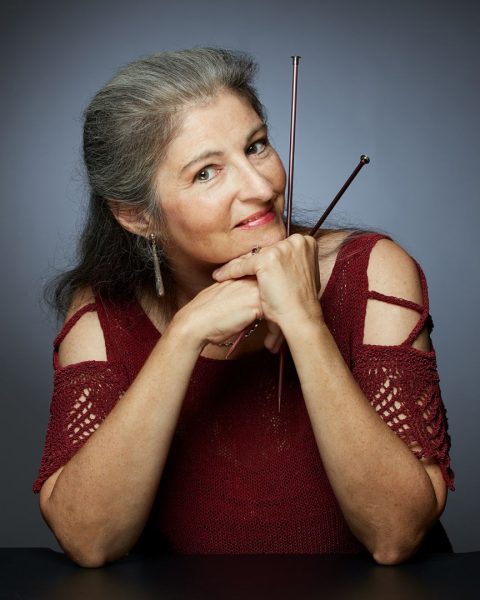
After a 33-year career as a systems engineer, Margaret Holzmann turned her creativity to knit design.
What first drew you to the craft and later to designing?
As a child, I was interested in all kinds of creative, hands-on arts and crafts. My mom could teach me most of the fiber arts and sewing, but knitting captured my imagination. I loved making blankets and sweaters, and I could never seem to stick to the instructions. I always had my own ideas, and I wasn’t afraid to alter things to make them work.
I think that instinct to experiment and figure things out for myself is what eventually led me to designing.
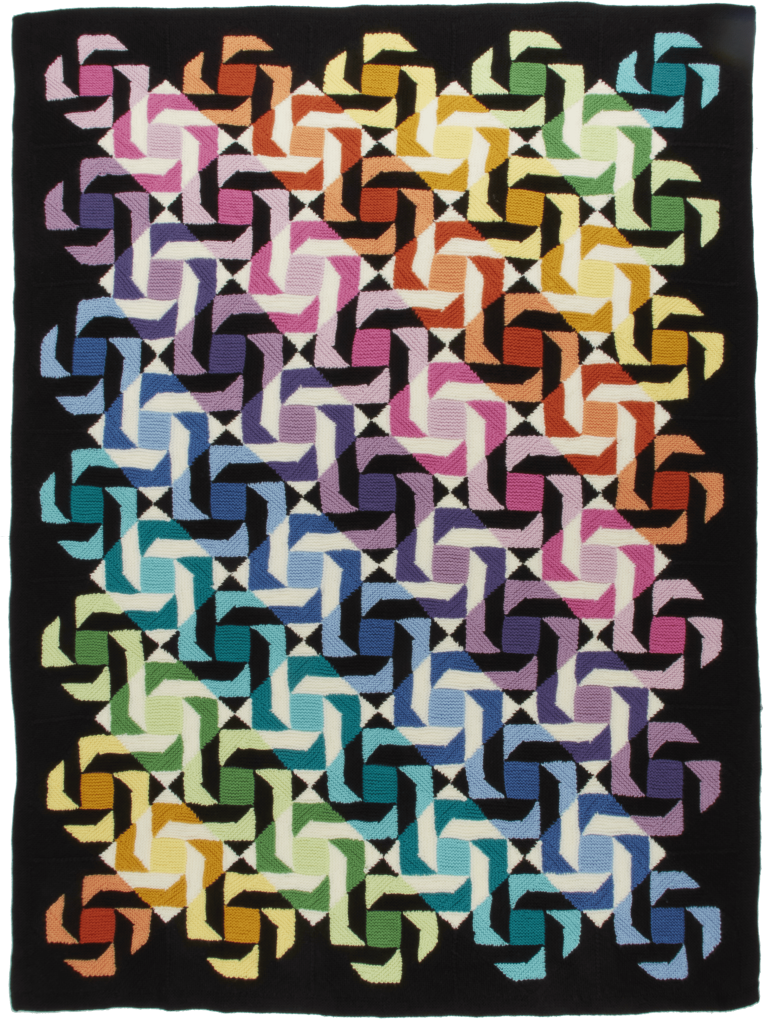
Pinwheels Blanket
Yarn: Cherub Aran
Pattern available on Ravelry
How would you describe your design aesthetic or signature style?
I think I have two styles: whimsical for my life-themed blanket designs, and geometric and abstract for my other blankets.
What ties them together is that I like colorful graphic designs, and I enjoy combining techniques in unusual ways. I’m interested in pushing the boundaries of what you can produce with two needles and some yarn. A lot of my designs begin with the question, “How can I actually knit that?”
Where do you find creative inspiration these days?
One way I like to start is with a specific geometric shape or a construction approach. I then see where I can take it. I recently started working with quarter circles, for example, and that led to an abstract blanket, a blanket with birds, and a blanket with monsters.
I’m also working on my next book, Block Party, a collection of interchangeable blocks which can be repeated and combined to create many different blankets. Some of the blocks are my own designs, while others are inspired by quilt blocks.
One of the interesting challenges with Block Party is figuring out which blocks work well together. A block may be beautiful on its own but difficult to combine with others.
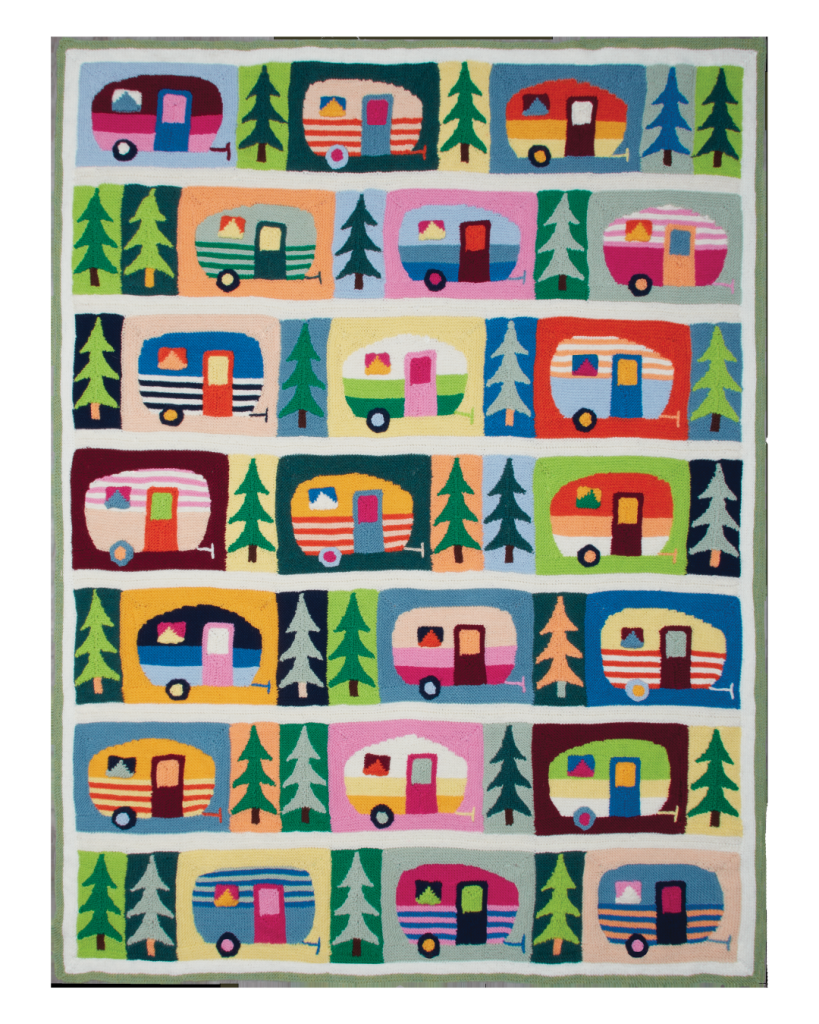
Camp Along Blanket
Yarn: 220 Superwash®
Pattern available on Ravelry
Can you walk us through your design process – from first spark to finished sample?
My design process can start in several different places. Sometimes it starts with yarn that I’m trying to develop a design for. Sometimes it starts with a construction technique that offers an opportunity to create a motif that hasn’t been seen before in knitting. Other times it starts with a visual prompt, such as a quilt block, tile design, or a picture I have in my mind—a scene like an ocean or a city.
I try not to limit myself too much at the beginning. The next challenge is figuring out how to actually knit something that matches the inspiration.
There is often quite a bit of experimentation. I may make drawings and develop some initial written instructions, or I may create a knitting chart using Stitchmastery. Then I sample-knit the shapes and compare them with my drawings. I make sure they lay flat, have the proportions I want, and will fit with the other shapes in the design. During this phase, there is a lot of back-and-forth and resampling.
Once the construction is working, I write the pattern. My initial drawings often become the construction illustrations in the finished pattern. Then come the usual stages of tech editing, sample knitting, testing, and photography.
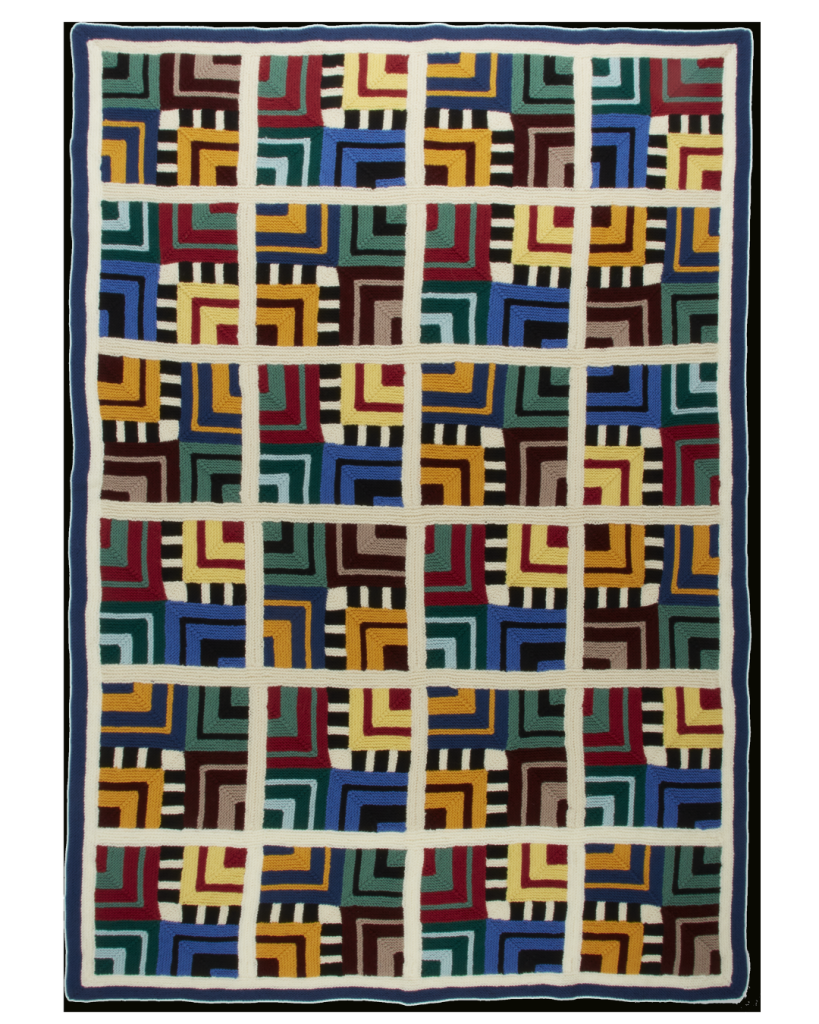
Wonky Walking
Yarn: 220 Superwash®
Pattern available on Ravelry
Which part of the design journey brings you the most joy?
I have two favorite parts.
One is coming up with the initial idea and having those “aha!” moments when I figure out how something might actually be constructed.
The other is finishing the blanket and showing it around. I especially love when one of my books comes out. There is something thrilling about holding a book full of your work in your hands and knowing that people will be making your designs. I like the idea that something I made can continue to exist and be used by other people.
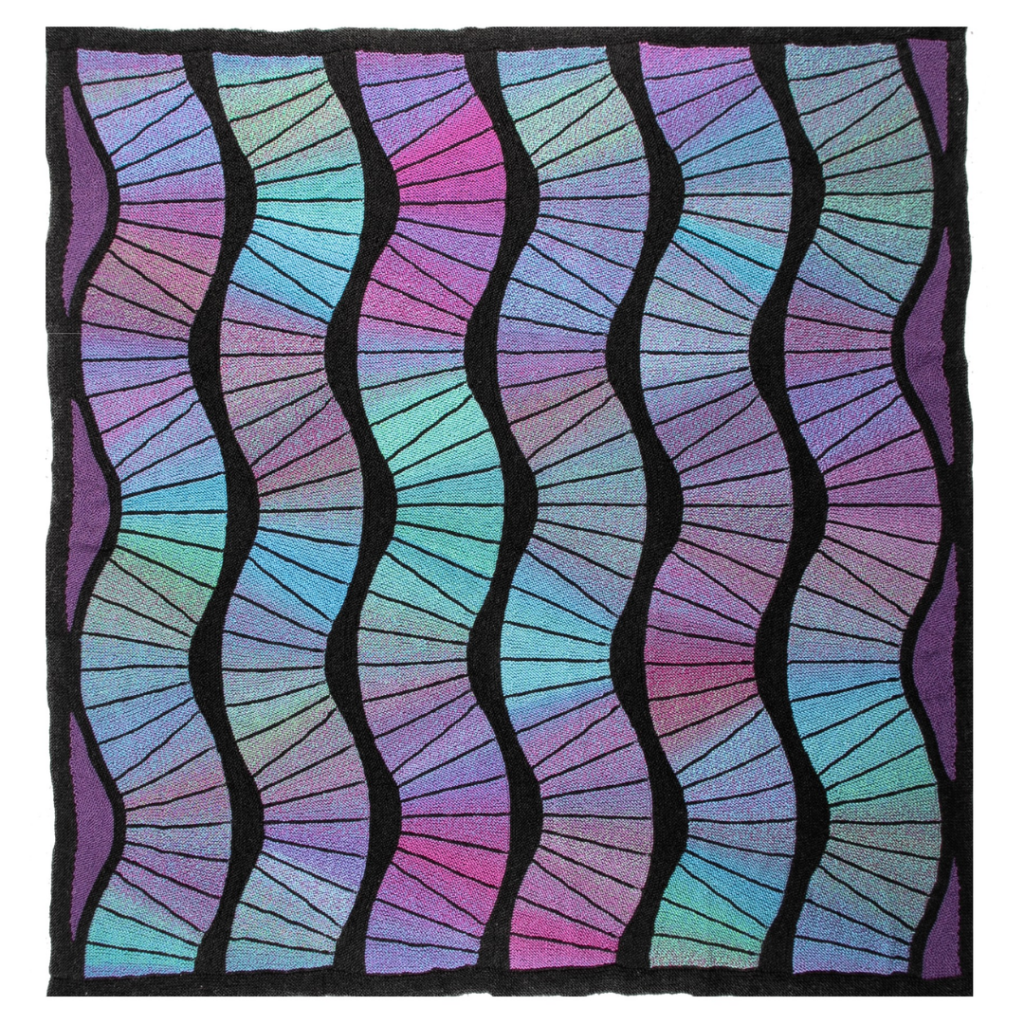
Waves Blanket
Yarn: 220 Superwash®
Pattern available on Ravelry
What’s the most challenging step and how do you tackle it?
The most challenging part for me is the parallel development of patterns. I want to focus completely on the design I’m developing, but there are always many other things happening at the same time competing for my attention.
I’m answering questions from knitters, responding to testers, and fixing patterns in the testing phase, while working with sample knitters and teaching. All of these things are necessary, worthwhile, and useful—but my head really wants to be designing full-time and fully immersed in the creative process.
I haven’t completely solved that problem yet! I try to keep an “interruptible” mindset while still focusing on designing to make progress. When I feel overwhelmed, I make a list.
What do you look for in a yarn when starting a new design?
Color choice and breadth are probably the most important things for me. So many yarn lines are designed primarily with garments in mind, so I gravitate toward yarns with a wide range of colors representing every part of the color wheel. I usually won’t even consider a yarn line that doesn’t have at least a good gold or yellow, and surprisingly many don’t.
I’m also looking for colors that play well together, and I work with weights from DK through chunky depending on the design and how intricate it is.
I tend to prefer yarns with a little surface softness or “fuzz,” such as Superwash Merino or Merino/Acrylic blends. Very sleek, slippery yarns can show stitch maneuvers extremely clearly, which isn’t always what I want for the kinds of graphic designs I make.
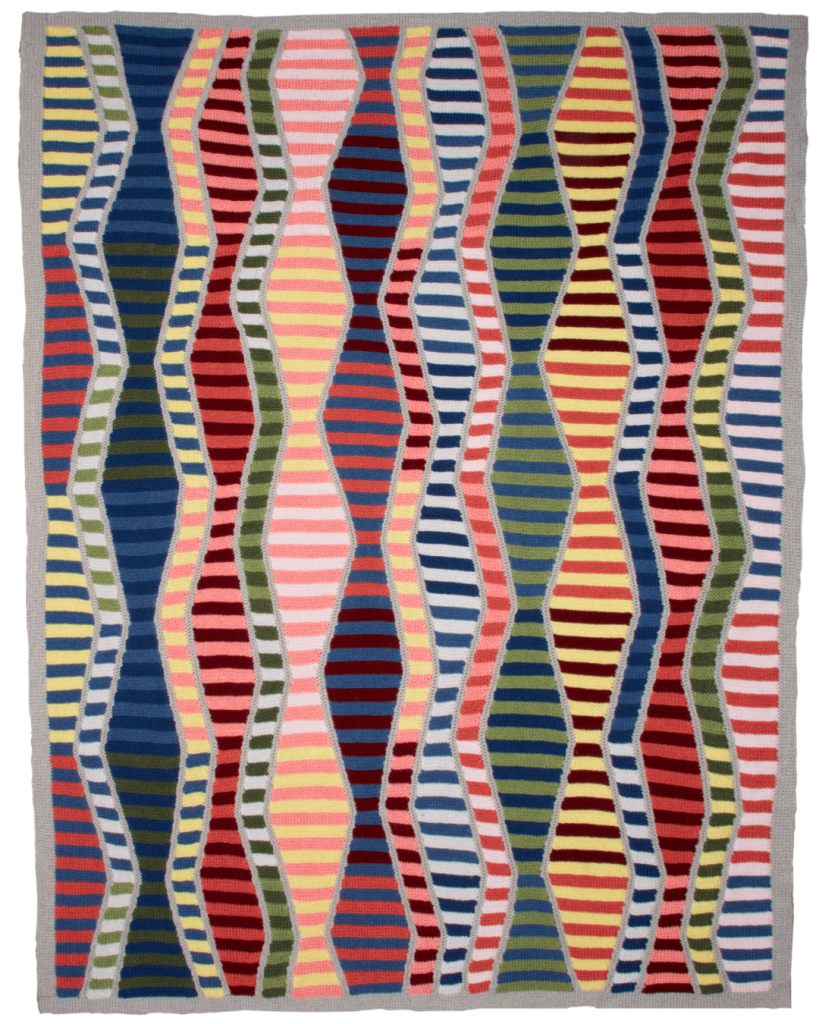
Stitches in Time
Yarn: Pacific®
Pattern available on Ravelry
Do you have a Cascade Yarns favorite, and what makes it special for you?
If you are familiar with my blankets, you know that many of them are worked in Cascade 220 Superwash. I also like the waves variant of this yarn.
Cascade 220 Superwash is my go-to yarn when a design requires particular colors. The quality and durability are excellent. It’s easy-care and washable, but what really sets it apart for me is the extraordinary range of colors. I can almost always find exactly what I want, and it is a joy to contemplate all the possibilities.
Cascade has also been incredibly generous with me in supplying yarn for my designs and making it possible for me to do what I love. I’m very grateful for that support.
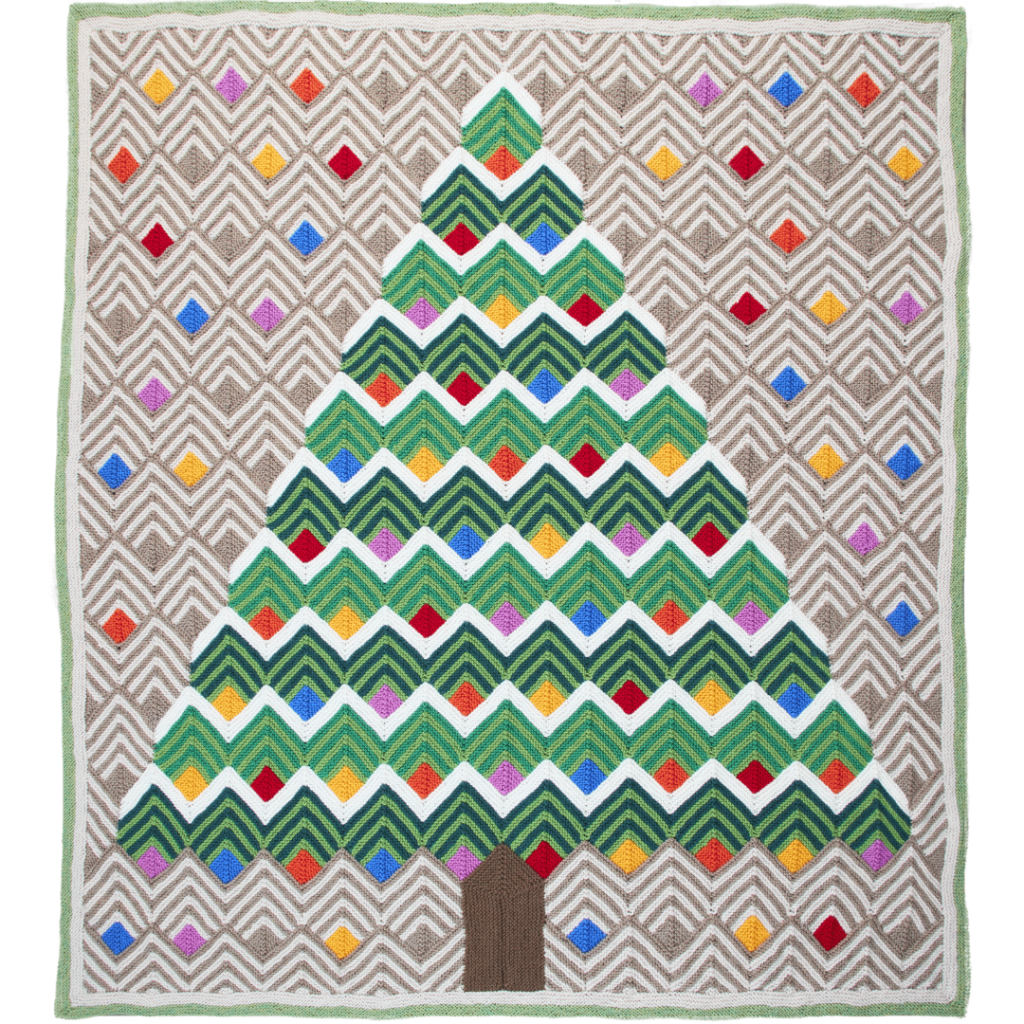
Tree of Light Blanket
Yarn: 220 Superwash®
Pattern available on Ravelry
Where does the inspiration for your Cascade Yarns projects come from?
Let me tell you about my latest design in the works, Whales.
I had a vision of an ocean scene with mother and baby whales who have finally arrived at their summer feeding grounds in the waters off Alaska. I knew from the beginning that I wanted to make it in Cascade 220 Superwash because the colors were exactly what I needed for the ocean, sky, mountains, and whales.
The pattern is currently being tested and will be released in a couple of months. Interestingly, each one of my testers is using Cascade 220 Superwash. I never require my testers to use a particular yarn—in fact, they often choose something completely different from what I used—but in this case they all independently chose Cascade because they loved the colors as much as I did.
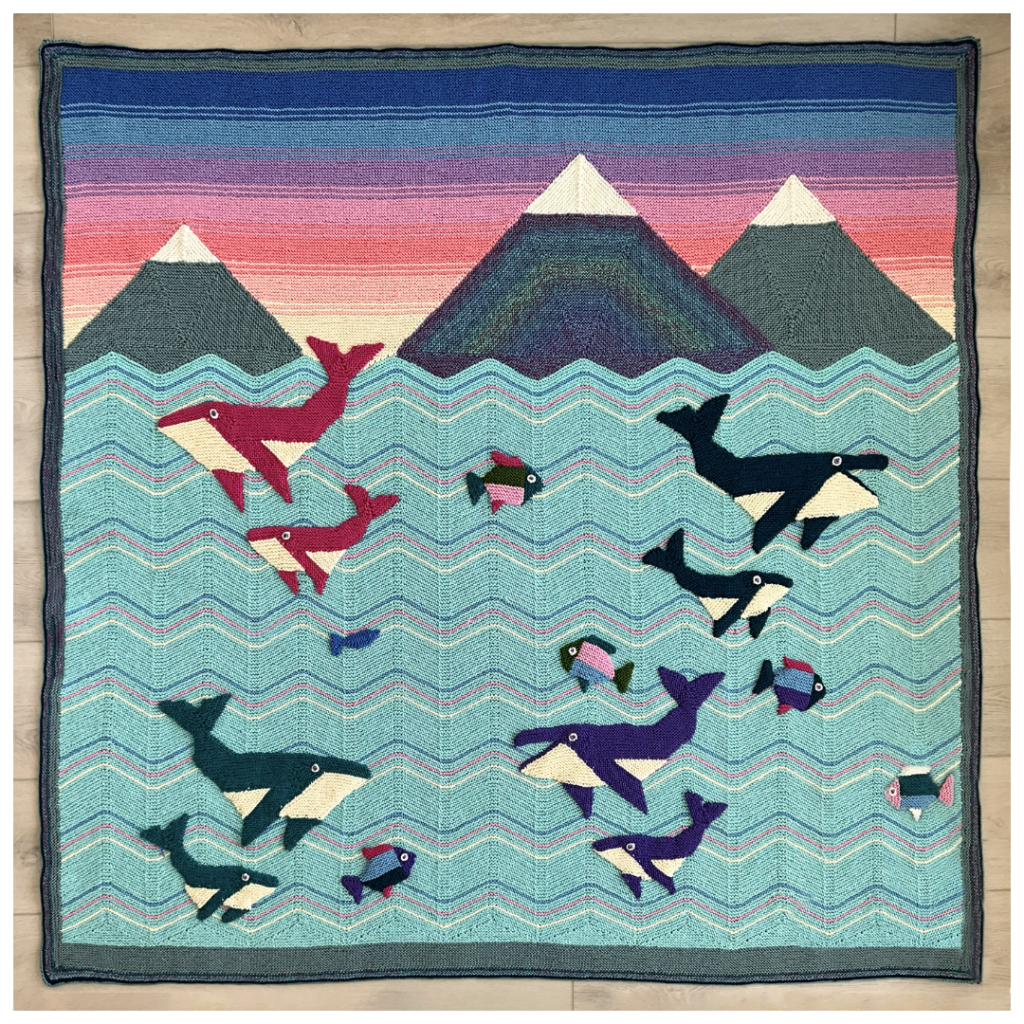
Whales
Yarn: 220 Superwash®
Pattern available on Ravelry
What tips do you have for makers working through your patterns?
One of my sample knitters, Julie, tells knitters working from my patterns that they should just read the instructions and try them, rather than trying to understand the construction before they begin. She says it will all become clear in the knitting.
I think that is excellent advice.
My patterns are designed to be clearly and thoroughly explained, so trust the instructions and give the construction a chance to reveal itself as you work. And if you do get stuck, you can always email me. I generally respond the same day.
What advice would you share with a new maker?
Knit for yourself to begin with. Figure out how to make one thing really well and build up a repertoire of techniques. Learn to read your knitting and, just as importantly, learn how to fix mistakes.
If you can find a yarn store or a person willing to help you initially—especially someone who can show you how to undo your knitting when you make mistakes—that can be enormously helpful. As great as YouTube videos are, they can’t help you fix your own knitting. Only an experienced knitter (eventually that will be you!) can help with that.
And don’t ever be afraid to rip something out and start again.
Knitting is a process, not just a product. Especially when you’re learning a new technique, try not to knit to deadlines. Give yourself time to experiment and make mistakes.
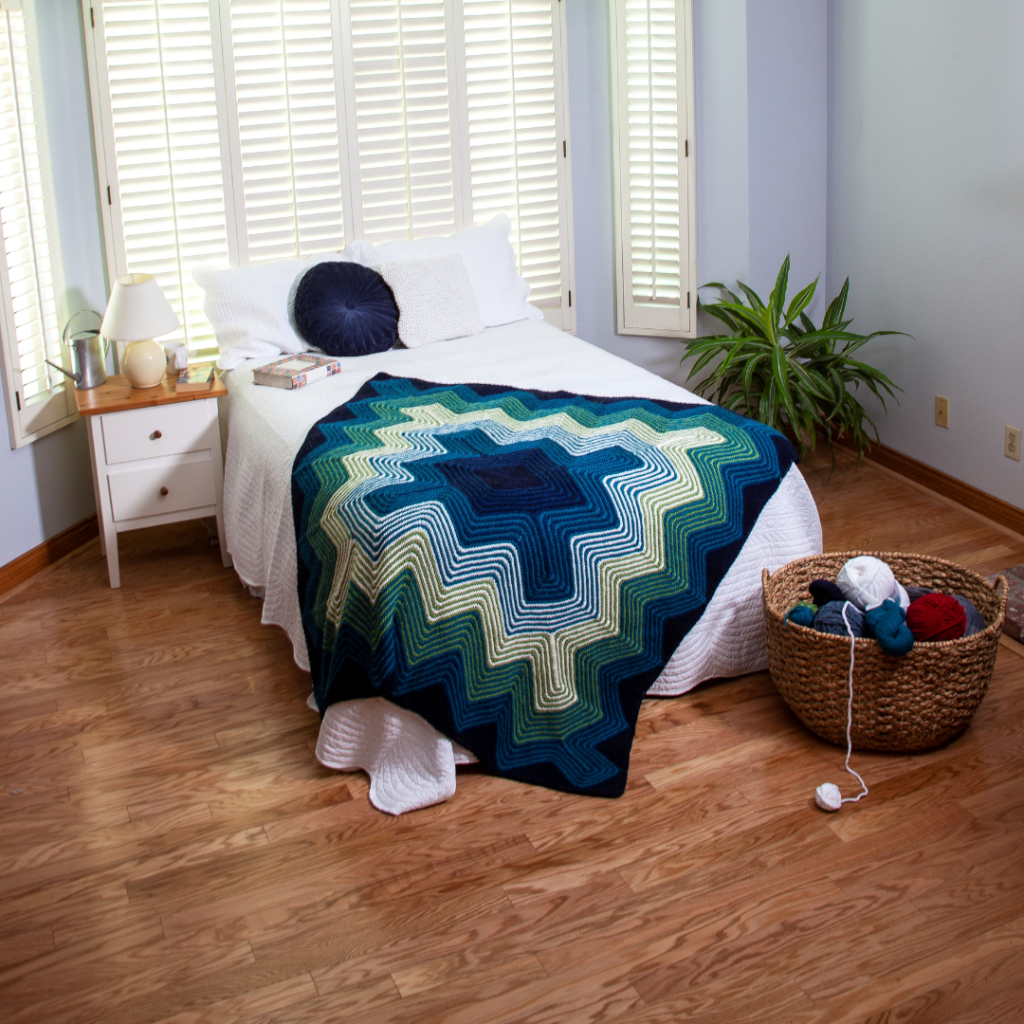 Pulsar Blanket
Yarn: 128 Superwash®
Pattern available on Ravelry
What are you passionate about creating these days, and what is the next challenge you are looking forward to?
I’m definitely gravitating more toward geometric designs, and I recently knitted an experimental geometric sweater.
Now I’m trying to figure out how to generalize that construction to a broad range of sizes while still making the geometry work. That’s a particularly interesting challenge for me to create something geometric that looks unique but good and fits a human body.
What excites you the most about the future of fiber arts?
I’m really excited about how many people are just starting to explore fiber arts. I work part-time at a yarn and fabric store, and it is amazing how many people come in who are curious, eager, and—perhaps most importantly—confident about trying things they haven’t done before.
I think that’s really exciting. There is a place in fiber arts for everyone, whether that’s knitting, sewing, weaving, quilting, embroidery, or several of them. I love seeing people discover the particular kind of making that captures their imagination.
Explore Margaret Holzmann’s creative world using the links below.
More Designer Showcase features coming soon!
Take a look at the creative journeys of other designers behind your favorite Cascade Yarns patterns.
Browse 2026 Designer Showcases